Harper Boat Club
The ExecutionersThe Harper Boat Club is the modest, informal boating association on the lake shore between New Essex and Harper that the Bowden family joins after abandoning the stuffy New Essex Yacht Club, and it becomes the setting where their beloved boat, the Sweet Sioux III, finally thrives and where the family's prelapsarian summer happiness is most fully expressed before Max Cady's intrusion shatters their world. Located ten miles closer to Harper than the yacht club, at the end of a road that turned off Route 18, the club represents a deliberate retreat from pretension toward genuine, unpretentious pleasure. It is here that Sam Bowden's sense of domestic security and contentment reaches its peak, making the club a poignant symbol of the fool's paradise that Cady's return will destroy.
Location and Character
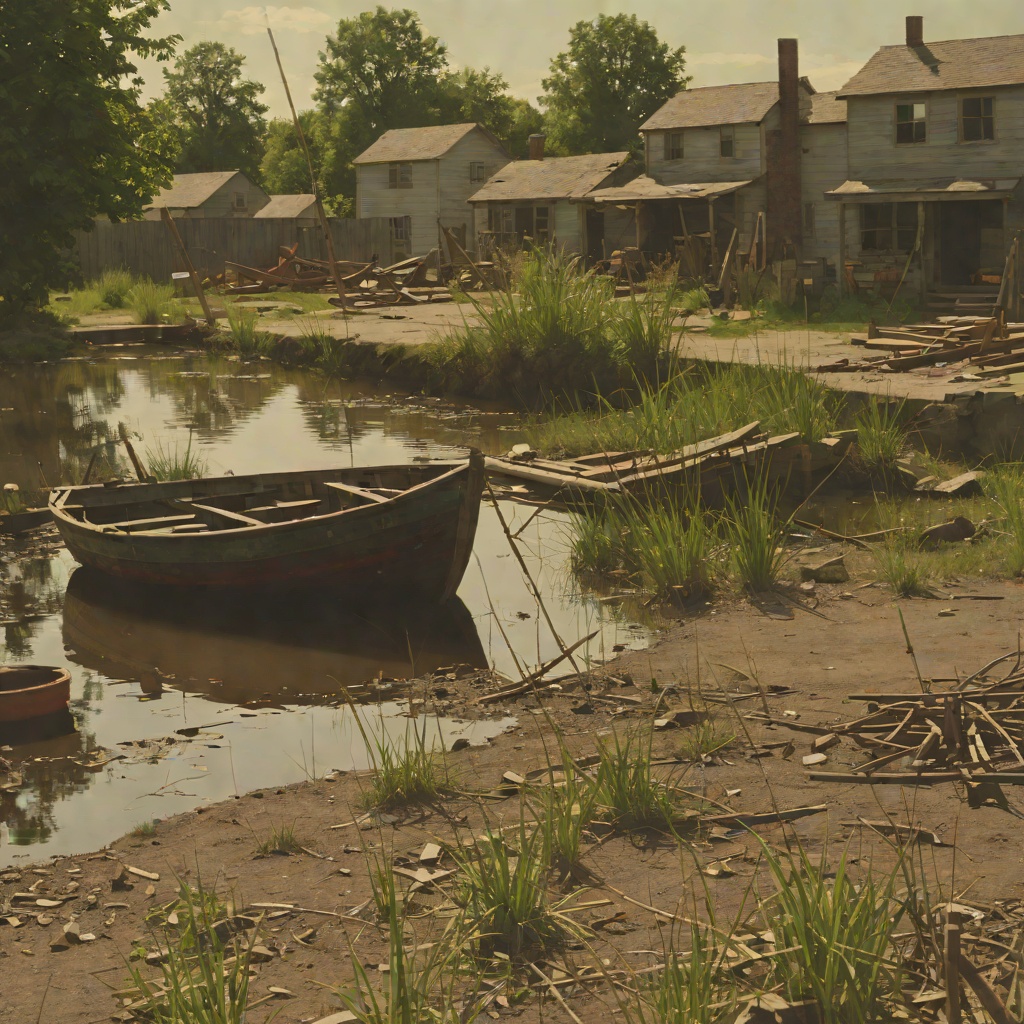
The Harper Boat Club could more accurately be called a shack than a clubhouse. Its boat basin was small and crowded, a far cry from the grand facilities of the New Essex Yacht Club. The club's character was defined by its neighbor, Jake Barnes's boat yard, a cluttered, informal enterprise run by a fat, sleepy man who had inherited the business when his father died. Jake was a good but indolent craftsman with rickety ways on which he could haul anything up to forty feet out of the water, a good touch with marine engines and outboards, and, when pressed, the ability to do major hull repairs. His yard was an incredible clutter of timbers, corroding hardware, empty oil cans, hulls too far gone for repair, rotting lines, and sagging roofs over his covered storage area. He sold boats, gas, oil, gear, fishing tackle, and cold beer, and he seemed happiest when he could stand in a dirty tee shirt and soiled duck pants drinking his own beer and watching the clientele work on their boats. Most members of the Harper Boat Club were ardent do-it-yourself addicts, a fact that seemed to please Jake, who charged only a nominal fee for hauling boats out. The children of the members of the neighboring club adored Jake, and he told them all kinds of monstrous lies of his adventures.
The Sweet Sioux III's New Home
The Sweet Sioux III took kindly to the change of venue. At the New Essex Yacht Club, the boat had seemed out of place, actively resenting her new environment; on each departure she tried to swing and bash one of the grand craft tied up near her. She had a single screw and a sixty-five horsepower marine engine of a make few people had ever heard of, an engine that was stolid, reliable, and unaccountably quiet, capable of pushing the Sweet Sioux along at a waddling ten knots. But at the yacht club the engine also revolted, quitting twice in the middle of the basin as they were headed in, forcing them to accept a tow on both occasions. After that, Sam kept a five-horse outboard motor wrapped in a tarp stowed forward. At the Harper Boat Club, however, the marine engine no longer conked out. Here the Sweet Sioux looked almost modern; as Sam reflected, after the opera the washer-woman had returned to the neighborhood saloon and was content. The boat's rehabilitation mirrored the family's own relief at escaping the expensive, excessively stuffy atmosphere of the yacht club, which was also a long way from Harper.
A Retreat from Pretension
The decision to join the Harper Boat Club came after Sam and Carol Bowden found the New Essex Yacht Club too expensive and too many of its members excessively stuffy. When it came time to pay dues for the second year, Sam and Carol talked it over and were each pleased and surprised to find how willingly the other person would give up the club. The Harper Boat Club, by contrast, offered a younger group and a great deal more fun at club affairs. The move was consistent with the Bowdens' broader taste for unpretentious domesticity, the same sensibility that had led them to fall in love with their old farmhouse on ten acres of land just outside the village of Harper, thirteen miles from New Essex, a house that was more than Sam should have purchased but whose constantly increasing land value consoled him. The club's shabby informality, its do-it-yourself ethos, and its proximity to home all suited the family's character far better than the grandeur of the yacht club ever had.
The Fool's Paradise
The Harper Boat Club belongs to the novel's portrait of the Bowdens' secure, happy world before Max Cady's return. Sam's sense that everything was under control, that the marriage was of the very best variety, that everybody was healthy, and that he had been a partner in the law firm ever since 1948, was the foundation of this contentment. The club, with its cluttered boat yard and its beloved, unreliable boat, was part of the fabric of that happiness. When Carol later speaks of their "nice little fool's paradise," and of the "untouchables" who believed the charm would never stop working, the Harper Boat Club stands as one of the concrete places where that paradise was lived. The club's cheerful disorder, its sleepy proprietor, and its contented boat all belonged to a world that seemed immune to the darkness that Cady would bring. Carol's later reflection that she had held "an enormous and infantile trust that this world was made for me to be happy in" gives retrospective poignancy to the club's simple pleasures, for the world of the Harper Boat Club, like the world of the Bowden home, was one that Cady's return would prove to be far more fragile than it had seemed. The club thus functions as a measure of what is at stake: a modest, unpretentious happiness that the novel's central threat exists to destroy.